Learn
What Is a Blockchain? A Beginner’s Guide
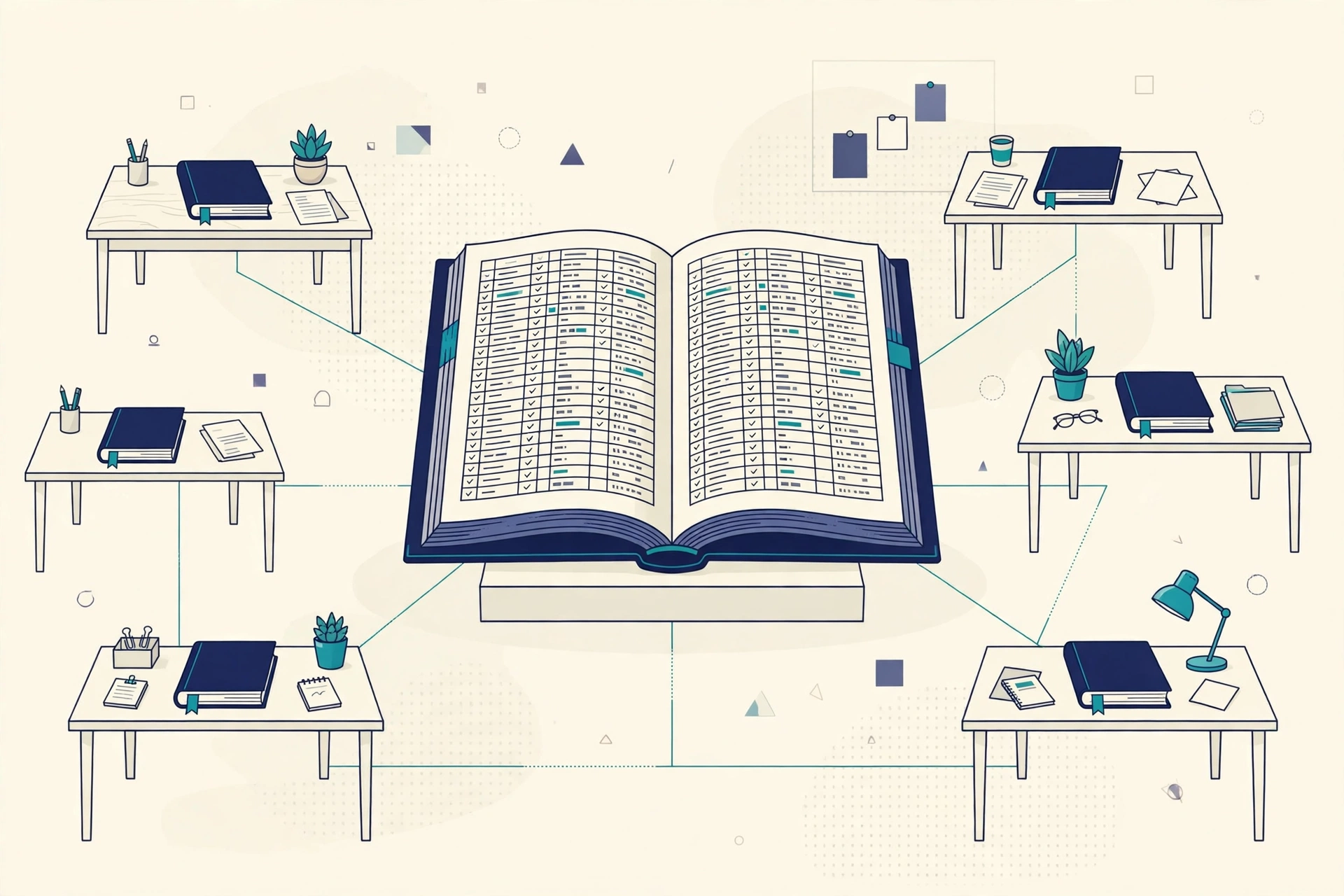
The short version: A blockchain is a record book that many computers share. Each computer holds the same copy. New records are packed into blocks, each block points back to the one before it, and that link makes old pages very hard to change without everyone noticing. That’s the whole trick. Everything else is detail.
You’ve heard the word next to Bitcoin, usually in a sentence that explains nothing. Forget the price charts for a minute. A blockchain isn’t a coin and it isn’t a company. It’s a way of keeping records so that strangers who don’t trust each other can still agree on what happened. The idea first appeared in the Bitcoin whitepaper published in 2008, which described “a chain of digital signatures” and a shared transaction history that participants maintain together.
What is a blockchain in simple words?
A blockchain is a shared list of records, copied across many computers at once, where new entries are added in groups called blocks and each group is sealed to the previous one. There’s no master copy and no office in charge. If your copy and my copy disagree, the network’s rules — not a manager — decide which one counts.
Compare that with how records normally work. Your bank keeps its own ledger. You see a balance; the bank sees the book. If a number changes, you can ask, but you can’t check the book yourself. You trust the bank’s staff, its software and its backups.
A public blockchain hands the book to everyone. Anybody can hold a copy, read the full history and check that new entries follow the rules. Bitcoin’s own beginner guide puts it plainly: the chain is “a shared public ledger on which the entire Bitcoin network relies,” as bitcoin.org’s how-it-works page explains. Trust moves from one company to a set of rules that anyone can inspect.
Blocks: one page at a time
Records don’t drip onto the chain one by one. They’re collected and written in batches, and each batch is a block. A block holds a list of recent transactions, a timestamp, and a reference to the block that came before it.
Here’s the order of events when a new block joins the chain:
- People broadcast transactions — say, one account sending funds to another — and the network passes them around.
- Computers on the network check each transaction against the rules, including whether the sender actually has the funds.
- Valid transactions are bundled into a candidate block, which records the fingerprint of the previous block.
- The network accepts the block through its agreement process, every copy of the book adds the same page, and the process starts again.
On Bitcoin this happens roughly every ten minutes, a target the protocol adjusts for automatically, according to the Bitcoin developer guide’s block chain chapter. Other networks add blocks faster. The rhythm differs. The pattern — batch, seal, append — stays the same.
How does a blockchain stop anyone quietly changing the record?
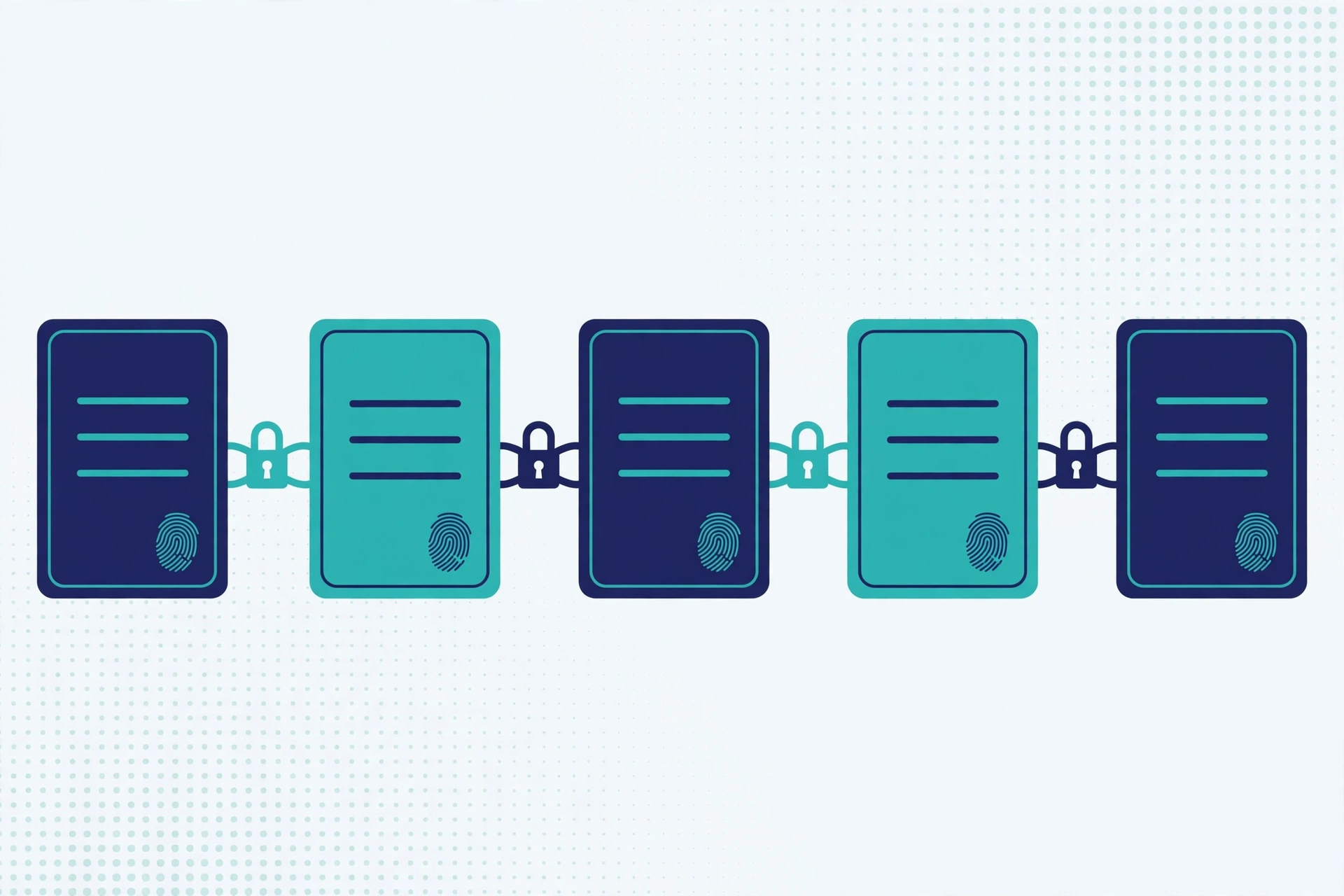
Each block contains a hash — a short string produced from the block’s contents by a math function. Change one letter in the block and the hash comes out completely different. Because the next block stores the previous block’s hash, editing an old page breaks the link to every page after it, and the edited copy no longer matches the thousands of other copies on the network.
That’s why people call blockchains tamper-evident rather than tamper-proof. The design doesn’t make editing physically impossible. It makes editing obvious, and it makes the edited version lonely. Your altered copy disagrees with everyone else’s copy, and the network follows the version that follows the rules.
Want the deeper version of hashes, keys and signatures? Our guide to how cryptography secures data walks through the math in plain language.
| Question | Ordinary database | Blockchain |
|---|---|---|
| Who holds the record? | One organisation, on its own servers | Many independent participants, each with a full copy |
| Who can change an old entry? | An administrator with the right access | No one, without breaking the chain links and convincing the network |
| Who checks new entries? | The organisation’s own software and staff | Every node, against rules anyone can read |
| Can you inspect the full history? | Usually not — you see your own account view | Yes, on a public blockchain the history is open to read |
The computers doing the checking: nodes
The computers that hold the book are called nodes. A node stores the full history, passes new transactions to its neighbours and rejects anything that breaks the rules — a payment of coins that don’t exist, for instance. No node is the boss. A node that starts inventing its own rules just gets ignored.
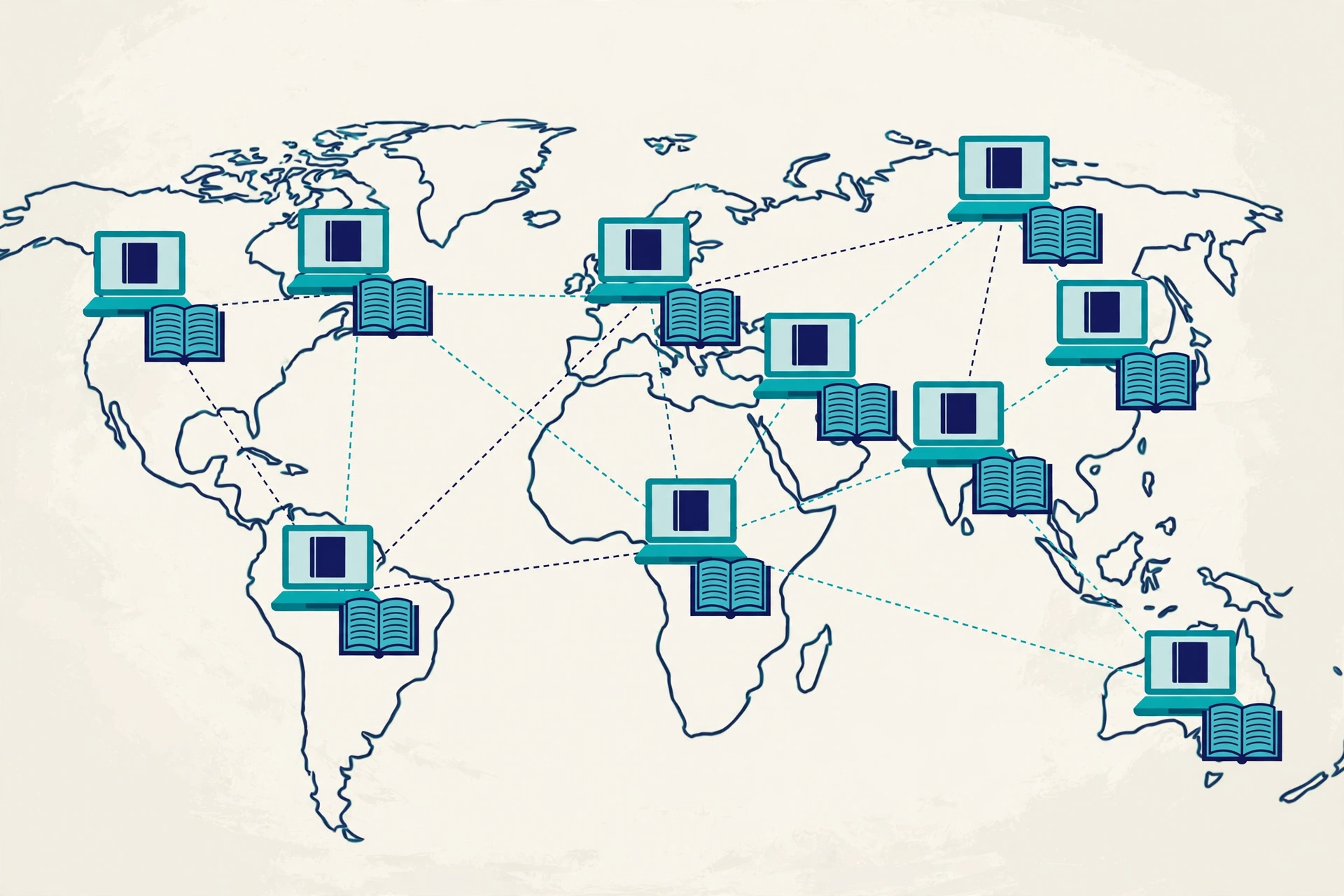
So who picks the next block? Networks use an agreement method called a consensus mechanism. The two you’ll meet most are proof of work and proof of stake, and they differ in who gets to add a block and what it costs to cheat. We compare them head to head in Proof of Work vs Proof of Stake. For now, hold onto the simple version: consensus is how thousands of strangers add the same page at the same time without electing a leader.
There’s a cost to all this independence, and it’s worth saying out loud. There’s no help desk. If you control an account with a private key and you lose that key, no support team can reset it for you. Our guide to what a crypto wallet is explains how keys and wallets fit together. Control and responsibility arrive in the same package.
What is a blockchain used for besides cryptocurrency?
Any job where several parties need one shared history that none of them can rewrite alone. Cryptocurrency is the first example, not the only one. The same setup shows up in programs that run on the network itself, in supply chains that track goods between companies, and in certificates and ownership records that anyone needs to check without phoning the issuer.
Smart contracts are the use that widened the field. A smart contract is a program stored on a blockchain that runs when its stated conditions are met — no clerk, no office hours. As ethereum.org’s smart contract documentation describes them, these programs are public and anyone can inspect the code before relying on it. Ethereum’s own developer introduction makes the same point about the network as a whole: it’s a “blockchain with a computer inside,” which is why applications can run on it rather than just payments.
Supply chains use the quieter version of the idea. A product changes hands six times before it reaches a shelf. If each handoff is written to a shared record, tracing a contaminated batch or a counterfeit part becomes a search, not an argument. Credentials work the same way: a university writes a degree record once, and an employer checks it directly instead of requesting a transcript and waiting.
None of this means every database should become a blockchain. Most shouldn’t. If one trusted organisation can keep the record and everyone accepts its word, a normal database is faster and cheaper. A blockchain earns its overhead only when the parties don’t fully trust each other, or when no single party should be in charge of the book.
Public and private blockchains
One last split, because the word covers both. Public blockchains, like Bitcoin and Ethereum, are open: anyone can run a node, send a transaction and read the history. Private, or permissioned, blockchains limit who can take part. A group of companies might run one together for shared records, with each company operating a node.
Both kinds use blocks, hashes and a chain. What changes is who gets a seat at the table — and with it, how much independence you get and how much speed and privacy you get back. Fees work differently across these networks too; our explainer on blockchain transaction fees shows what you’re actually paying for when a network charges you to write a record.
Three things people get wrong
- Blockchain and Bitcoin are the same thing. They aren’t. Bitcoin is the first well-known use of a blockchain. The record system underneath it is a general tool.
- Blockchains are anonymous. Public chains are pseudonymous. Transactions attach to addresses, not names, but the history is public and patterns can be traced.
- An unchangeable record is a true record. No. A blockchain preserves what was written, right or wrong. It proves an entry wasn’t altered later. It can’t prove the entry was honest when it went in.
So, back to the plain version. A blockchain is a book that copies itself onto thousands of computers, writes one sealed page at a time, and lets the rules — not a referee — settle disagreements. Learn to see that book clearly and the rest of crypto gets much easier to read.
Blockchain Basics series — start here, then go deeper
- How a Blockchain Works: Blocks, Hashes and the Chain
- Blockchain vs Bitcoin: What’s the Difference?
- What Is Decentralization, and Why Does It Matter?
- Proof of Work vs Proof of Stake: how blockchains agree
- How cryptography secures data: keys, signatures and hashes
- What is a crypto wallet?
- Blockchain transaction fees, explained
Frequently asked questions
What is a blockchain in simple words?
It's a shared record book. Many computers each hold an identical copy, new entries are grouped into blocks, and each block is locked to the one before it with a digital fingerprint. Nobody owns the book, and nobody can quietly edit a page once it's written.
Is a blockchain the same thing as Bitcoin?
No. Bitcoin is one network that uses a blockchain to record transfers of bitcoin. A blockchain is the record-keeping system underneath. Other networks use the same kind of system for other assets and for programs that run on the network itself.
Can someone change an old blockchain record?
On a large public network, not quietly. Changing an old block changes its fingerprint, which breaks the link to every block after it. The changed copy also stops matching the copies held by thousands of other computers, so the network rejects it.
Do you need cryptocurrency to use a blockchain?
No. Cryptocurrency is the first and best-known use, but the same record system can track shipments, certificates and ownership records. Some blockchains have a native coin because the network uses it to reward the computers that keep the record. Others don't involve a coin at all.
This article was created with AI assistance and reviewed by our editorial team before publishing.
Sources
- Bitcoin whitepaper published in 2008 (bitcoin.org)
- bitcoin.org's how-it-works page (bitcoin.org)
- Bitcoin developer guide's block chain chapter (developer.bitcoin.org)
- ethereum.org's smart contract documentation (ethereum.org)
- developer introduction (ethereum.org)